ASCII by Jason Scott

Jason Scott's Weblog

The Phone Stories: VOICEMAIL —

Like a lot of teenagers, I had voicemail. That is, like a lot of teenagers now. But I had voicemail in 1984.

This came about because a kind soul posted a phone number to a voice mail system in Washington DC. I knew it was Washington DC because the area code was 202 and by thirteen I’d memorized all the area codes. You did that sort of thing when you were using phone codes, since you were then calling so many different states and provinces you simply had to. 404? Georgia. 617? Massachusetts. 415? California. I could rattle them off like my own phone number. “Give me an area code” was an occasional but always fun game, although winning it was kind of an empty victory.

I knew the voice mail system was in Washington, but that was about it. In this particular case, each mailbox got its own phone number on the private branch exchange (PBX). That is, when you called a number, you got a single person, no indication of what company, and you could leave a message. And, like many companies with a new PBX, this company set a default password on all the accounts. I don’t think it was 1234 but it very well might have been. With a few random dials, I got a phone number (really, an extension) to try out, put in the default password, and I was in. Wily hacker, indeed. A quick change to the password, a new incoming message, and here I was, just thirteen, with a slick way for people to reach me.

I hadn’t found the number. The message from whoever gave the number had hints on how to get a voicemail box on it. But still, I’d done it, I’d gotten my piece, and I was one proud bastard. With my street-cred 202 number, I logged onto BBSes and posted like I usually did, except now I mentioned people could “call my box”. Make a little pistol-shooting gesture with your hand and wink. That was me.

Some of the BBSes I posted on included a board in New Jersey called the Restaurant at the End of the Universe and a board out in Minnesota called the Safehouse.. Like the rest, I invited folks to call my box and leave messages. I then checked my box faithfully, several times a day.

Messages started trickling in. People checking out the system. Kids fascinated you could press keys and make this “computer” do stuff. People screwing around, leaving profanity or sounds. Even kids breathing in while talking, trying to get around any voice printing that might be going on. Many of them called me “Alan” and this confused me, until I realized the “short name” setting still told people the “old” owner of the box, whose name was Alan. (I then went in and fixed this as well.)

Amazingly, this thing impressed people. Kids called and offered me “elite” access. People called me (not the service) cool for doing this. And one kid thanked me for specifically making the BBS I’d logged onto cool by posting this information.

His handle was Machiavelli, and he was on The Restaurant at the End of the Universe (also known as Milliways BBS). This message, plus the charm of the BBS, kept me calling back. A lot. And over time, my personality and style won me points with the sysop, Outland, whose real name was Jim. He offered me a co-sysop position, my first, and from there my love of BBSes grew even more than it already was. My times with Jim and the Milliways BBS will fill an entry of their own someday. And I owe it all to my voice mailbox.

Being who I am, I recorded all of these messages using an induction microphone and saved them for history.
Why, here they are in this directory.

Cell phones, it has to be stressed, were a dream for even the most well-off kids. They were such a premium that I remember how places would sell fake plastic cell phone attennas that you could attach to your car and fool people into thinking you were more connected and classy than you were. And I certainly wasn’t going to be giving out my home phone number to people I didn’t know to discuss software trades or shared phone information. My box solved all this. Just reach me on my 202 number, I’d say, and I’ll check it and call you back.

By the age of 14, I was already using the box like people use them today on their phones; to store cool messages, to leave notes to myself, and to test out new phone codes. Naturally, codes would sometimes be scarce and I’d pay the money to call. It cost a bit, but it was worth it, if just to pick up my messages and get back to people. Non-local calls were still a wallet-breaker for the population, but I was quite happy with my hundreds-of-miles distant voicemail and telling people they “knew what to do”.

Stolen voicemail boxes, of course, were short-lived at best. Like anything swiped away but still running at someone’s place of business, it was inevitable that the hoisted number would be found out and the box shut off, or recoded and all the messages deleted. It was the price of doing business, of getting for free what others were paying hundreds of dollars a year for.

But here’s the weird part: My voicemail lasted for five years.

From when I was 13 to when I was about 19, I had this box. That’s a long, long time by any stretch, but by hacked voicemail standards it was Highlander-class immortality. In those five years, I changed schools, got new friends, started my own BBS, had a lot of laughs, a lot of good times, and a lot of sad times. But I always had that box.

In fact, I can remember where I was standing, what phone booth near what diner in what town, when I called my box to check messages, and got the error.

The error said I had the wrong password. But that couldn’t be. I knew this box by heart; I could call the whole thing without even looking at the phone dial (and often did). So I hung up and tried again.

I remember the grey day, I remember the rain drizzling across the street and against the booth when I realized my box, my little teenage piece of the phone system, was gone forever.

I even remember, strangely, what I said at the phone as I hung up the handset and left my childhood toy behind:

“Thanks”.


The Big Picture —

Some time ago, I talked about a theater on the way out, in an entry called The Little Theater. I talked about how they didn’t own their property, didn’t have a lobby to speak of, had basically taken the idea they were a utility and then turned around and demanded a million dollars from the world so they could go on. It was quite a negative entry, and I had no proof my opinions were relevant.

Let me correct all that by telling you about The Big Picture.

While travelling through Vermont to do a couple of interviews for GET LAMP, I found myself with a little extra time. I drove around the countryside near Waitsfield, Vermont (near the Mad River) and saw that there was a movie theater near the main road. I drove down to investigate, just to see what sort of place it might be, and what sort of stuff they might be showing.


The Big Picture might look kind of like a weird house out in the middle of a field near a lot, but coming closer, you start to see the interesting way it was built; hints of art deco, pretty lighting, and a functioning clock telling you of the next showings. Its marquee is clean, bright, and distinct. It invites you in.

Once inside, however, you’re in for a real treat.


Some modern theaters might have a dingy, anaemic lobby that wants nothing more than to shuffle you past a selection of overpriced candy to get into the film box, or provide a gymnasium-sized impersonal box covered with ads for whoever paid the big nickel that week. But The Big Picture has an expansive, windowed lobby that offers not only ice cream, candy and soda, but has an entire sit-down bar and restaurant coated in beautiful hardwoods and soft lighting worthy of a classy bookstore. Before you even decide to walk down the hallway to one of the two actual theaters, you’ve already got a variety of activities you could do, whether it be to have a pre-film meal or enjoy a couple of drinks while talking with your friends in the comfortable leather couches and chairs.

I don’t drink, but I’m not the average person, and the average person would definitely love a place that lets you enjoy a good beer or wine and some snacks before making your way into the plush theatres for your films. Some might think this is all window dressing, but it’s not. It sets the stage for enjoying a film, and enjoying the company of others. You could come down early, have a meal, talk with friends or make new ones, and then make your way leisurely into the screens and enjoy a good show. In a world fighting rooms with big screen TVs, this is a heady defense against them; providing a place that’s worth not being alone in. Oh there’s free Internet.

Of course, this is all secondary to content, and what the theatre might have to show. This past weekend was “Movie Lover’s Week” and I took a shot of what was in store.


Delicatessen! !Enter the Dragon! Women on the Verge of a Nervous Breakdown! Thai Chi Master! Run Lola Run!
Kung Fu Hustle! The Eel! The Drunken Master! Karate Kid! The Gods Must be Crazy! If you can’t find something in the lineup that played across just the last weekend, tell me where to send the flowers, because you died.

Just browsing the website for this theatre shows the care that’s gone into putting stuff together. Not only are there specials for “dinner and a movie”, but you have the choice of brunches, and a special kids/parents night out on Wednesdays. But what’s this? A speaker?

I had struck up a conversation with the owner, a real great lady, and she showed me the two theaters. One of them had a lot (and I mean a lot) of space up front, more than adequate for someone to put on a sock hop or a game of dodgeball. She said they’d had bands, presenters, and a whole other range of activities in there. Glancing at the website, you can see the forthcoming appearance of Scott Ritter, who was a UN Weapons Inspector from 1991-1998. Yes, in person. At this theatre.

If I was a kid living in the surrounding area of Waitsfield, Vermont, it’d all be here: mom taking me to great movies in the middle of the week, and me seeing cooler and cooler stuff with all my friends, hanging down at the Big Picture as I got older, watching all these great movies I’d never heard of, and maybe when I got to a certain age, even being brought or going myself to hear a speaker talking about something of world import, right here in my town of about 6,000. Not a bad childhood at all.

I spent some time talking with the owner, who owns the land and the building (hooray) and told me about the effort put into making the place great. The events, the arranging, the billion little details in keeping a concern like this going. The surrounding area isn’t heavily populated, but she’d renovated the place to be what a modern theatre should be: a destination, not just a way-station on the way to somewhere else. Truly a charming (and smart) lady.

If you live within a hundred miles of this place, it’s worth the trip, a full day you could spend enjoying yourself and seeing movies in a way they’re meant to be seen.

It can be done. A theatre in the modern age of plasma and THX in the home can survive, thrive, and give you something you can’t get 20 feet from your bathroom. I’ve seen it with my own eyes. I hope I see it in Waitsfield (and many other places) for decades to come.


The Phone Stories: SECURITY —

I suppose if you’d held me down in my early teens, I’d have happily called myself a “Phone Phreak”. However, a lot of that was because if you scoped around the world of BBSes and Textfiles at the time, people who called themselves Phone Phreaks had the coolest attitude, textfiles, and history. While “Hackers” were of great programming skill and able to use computers in neat ways, and “Crackers” had the coding skills to break copy protection, Phone Phreaks could point back nearly a hundred years to this incredible phone system and rumors of people who could float among the wires and do amazing stuff. The whole Phreaking art seemed to project a sense of tradition, skill and honor that, to a 13-year-old, was pretty amazing stuff. A bonus for myself was that textfiles showing up on bulletin boards were always the best read if they were about Phone Phreaking. Textfiles.com is jam-packed with phreaking textfiles of all stripe that I tracked down throughout the country, files that promised the world and occasionally even delivered. I saw in these files people brilliant enough to look up to. I totally bought in.

So I got the lineman’s “butt-set” and ripped apart a few telephones and did some wiring around the house, and fancied myself one of this tribe. But, at best, I was less a phone phreak than a Phreak Tourist, a near-the-edges guy who was good at observing and collecting but not much else. This always worked in my favor because I never seemed to be out to “get” something or gain some sort of upper hand on my contemporaries: I just wanted to gather stuff and collect it and then give it to others. I therefore got to be near a lot of neat things, even if I myself wasn’t the neat thing in question, or the creator of the neat thing.

On the other hand, my friends and associates were always doing neat things, using phones, computers, ham radio, and even cars and guns. I met some amazing folks who weren’t afraid to stick a hand deep into some wired box of death or yank on power supplies until a blue spark signalled they were heading in the right direction. I was lucky to know them, and they lived the dreams I dreamed.

As a Phreak Tourist, it was easy to boil Phreaking down to the most obvious two talismans that recognized the efforts of the art: telephone conferences and free phone calls. In an era where a telephone call 20 miles from your home could be a sizeable financial burden to a home if it sustained for hours, it was inevitable that I and many others who intended to spend days online would find any way to reduce crushing costs for our phone calls. This was done using something we euphemistically called “codes” or “phone codes” but which in fact mostly were cases of calling alternate long distance phone carriers and typing in false calling card numbers until they worked. If this sounds vaguely illegal, take out the “vaguely” part. And if it sounds difficult, it wasn’t. As astounding as it might be in the eye of the modern user of telecommunications, some of the alternate long distance companies had calling card numbers a mere 4 or 5 digits long. Teenagers come in two main flavors: disinterested and scarily intense, and a scarily intense teenager could slice through a 4 or even 5-digit code set like a hot knife through cellophane.

I have very strong memories of lying in bed, in the dark, with a telephone under my right hand, my head on a pillow with a telephone handset pressed against my head. I could easily dial without looking at the buttons, not unlike a blind person, and I could remember simple sets of numbers. It was trivial, therefore, to be able to spend those hours after one might drift off to sleep instead tapping away at a touch-tone keypad, blowing through the access number and then typing in a phone number and a code, and then waiting in that distant dark space to see if the phone would ring. To this day I can remember the telephone number of my favorite BBS, Sherwood Forest II: 914-357-1519. I haven’t been on Sherwood Forest II in over twenty years. I’d dial, and wait to hear if I got through, then mentally file the working code and move on. What phone company could have honestly expected that level of interest and drive from suburban youth? (They did, eventually, catch on.)

Meanwhile, the conferences were the other lifeblood. As exciting as it was to speak on the telephone, nothing ever outdid the mass of information, socializing and joy of a multi-party conversation between like-minded folks… or even non-like-minded folks. The difference between a two-party call and a telephone conference was like the difference between a Sno-cone and skiing. And the best part was how sometimes the conference would come to you, unannounced, just you picking up your ringing phone and a dozen people would call out your name and drag you into the never-ending conversation.

In today’s age of SIP, Asterisk and Skype, telephone conferences are still going on, but they’re numbingly simple to achieve. It’s an ancilliary part of the process that you can make them happen, and you instead can focus on the good stuff, like adding the right people or choosing a good time or theme to drive the call. I was recently interviewed by two teenagers via Skype for their hacker radio program; we spoke together from three different states, and one of my interviewers had to bargain with his mom to let him finish recording the show before he continued his Bar Mitzvah practice. This is quite a leap from a time I knew where being able to conduct a phone conference was on the same level of reverence as being able to fly a helicopter.

There were several ways to generate a phone conference, ranging from using a PBX system at an office to do so (very rare), connecting to a “telephone bridge” where a switching system might have a conference set up and people could call in (just a few, traded like gold), or, in many cases, calling into a company called Alliance Teleconference, which used 700 numbers you dialed that then made you a “moderator”. As a moderator, you could then call in a bunch of other folks, and talk to someone you just dialed before adding them to the big mix. Moderators would often dial a second phone line in their house so they could avoid missing any part of the “con call”.

While the other methods were spotty (no access to a PBX, phone bridges guarded intensely and for good reason), Alliance Teleconference was dependable; after all, it was a business. And, because it was a business, it was intensely expensive. The charges, as were told to me, were something on the range of a dollar a minute per line, plus long distance charges. Mull that for a moment. A one hour telephone call between you and your five buddies discussing your plans for the weekend was something in the range of $300, plus long distance if some of your buddies were a ways away. That’s scary money, especially if you’re at an age where you’ve never actually held three hundred dollars of currency in your hand at the same time in your life.

The two options presented were to wait and grow old enough to afford this, or steal it. And waiting is boring.

Most phone codes didn’t work with the Alliance Teleconference; they just didn’t recognize “0-700” as a valid area code, which was the first part of Alliance’s telephone number. The easiest way to do it was to find a cheese box.

A cheese box, or more accurately the need for one, dates to before call forwarding was an available option on telephone lines. Now, you can tell the phone system that any calls to your number should be immediately forwarded elsewhere. Usually you’re charged for this, but it’s not so bad and it just reflects the fact that you’re making the equivalent of two phone calls. In the analog switch days, people who wanted to be reached 24 hours a day but didn’t have a very expensive mobile phone, bought a cheese box. More often called a “call forwarder”, it would, when turned on, answer the phone, and immediately call a second number on a second phone line and connect the two. In this way, you could be “on call” 24 hours a day even if you actually went home at night. This was popular with plumbers, doctors, dentists, and other such firms.

You, the aforementioned scarily intense teenager, needed only to call these places, one by one, and then not say anything when the sleepy capitalist answered the phone. If you stayed on until after they hung up, you would get the dial tone of the second telephone line. At that point, the world was your oyster, or at least, the world was your victim’s oyster but you were getting the pearl. (It was best to do this from a payphone, just to be sure it worked right, as you might have only gotten your own dial tone, with hilarious results).

Really, you could then call any number, but you got the most bang for your buck by calling in an Alliance Teleconference and that’s what all the people I know did. Phone numbers would be called, people quizzed, and ultimately you would suck in 10 or 20 people into a conference. The conference would then rage for hours, people joining and dropping, until the rays of sunlight peeking into your room meant the telephone owner was going to head into work and you’d better get the hell off the line.

(Bear in mind that occasionally Alliance Teleconference would catch on that something odd was going on; I can recall one particular teleconference where an Alliance Operator bounced into our conference and said, loudly, “SORRY BOYS, THE PARTY’S OVER”, and then proceeded to knock us off, one by one, off the line. I especially recalled this because we began trying to bargain with the operator, trying to charm her into letting us continue to rack hundreds of dollars in charges. As people were knocked off, we’d wail and keen over it: “Oh God, Oh God, they got Seth. SETH!! SETH!!”)

After the deed was done, at the end of the month, the reckoning would happen. A bill would be generated, and sent out to the owner of that cheese-box enabled phone line. This bill would be, as you can now infer, usually in the range of a few thousand dollars. I am sure you could power a battleship from the amount of anger this would generate. After a frantic call (or calls) to Alliance Teleconference, the victim would get the charge stricken, and, as far as anyone would likely be concerned, the story was over.

I mention all this to tell you of the time someone didn’t consider the story over.

We had a very special telephone line in the house; one which was used as part of the Guardian System, where my father would call into the mainframe at IBM, and then it would hang up and call the special telephone line back. This provided the whole transaction with much better security than simply user-password. This line was paid for by IBM. As a result, the line was listed as IBM. In fact, if you did a reverse lookup on it, all it was listed as in terms of name and address was “IBM, Armonk, NY”. I didn’t live in Armonk. I certainly wasn’t IBM.

This was my other phone line besides the BBS telephone line and our regular phone line. It was the easiest way to call me all hours of the day and night, because it only rang in my room. (It was downstairs as well, in Dad’s study, but I had an extension with a ringing phone in my room.) This was the number I was called on for a teleconference that lasted for about eight hours. Like all other similar conferences, I had a fantastic time, and at the end of it, hung up and went about my business.

A month later, I got a phone call on my line. I answer the phone “hello” generally, and did so in this case. Lucky me.

The woman who called turned out to be one of the owners of a security company (one of those places that sells burglar alarms and a service to answer the phone and call the police when necessary). She had gotten a many thousands-of-dollars bill for a teleconference. She was the owner of the cheese box. She was very pissed, but not in a way that manifested itself in screaming. Instead, she and I began a little conversation.

Because of the situation with the telephone, all she knew was that I was “IBM, Armonk NY”. Listening to me over the phone, she knew I was likely a young male. And that was it. She was calling to ask me about the teleconference.

Naturally, I played stupid. Obsidian block stupid. Broken TV stupid. And cheerful. That cheerful, playful tone one takes when they feel they have total immunity and impunity. I think this amused her, even as she was trying to discern who exactly I was and what my deal was.

We danced, the two of us, in a way I have rarely ever danced since. Pursuer and pursued, where Pursued held all the cards and Pursuer held a big-ass whopping phone bill. She, pointing out how I must certainly know who called me, as I was the first number called in the teleconference and I had stayed on the longest. Me, saying I got phone calls all the time and I never really could figure out who all these crazy kids were.

Twenty years on, I can still remember the dance.

“So, what else do you do besides answer expensive phone calls?”

“Oh, this and that. Read, hang out at school.”

“Oh! What school would that be?”

“Ah! Ah! Just a school like any other, no need to name it, it’s so minor.”

and so on.

We talked for an hour before she wished me well and hung up. A week later, she called again, seeing if my parent would pick up, or I’d slip up. Again we danced, discussed her security company, about what they did, how the stuff they did serviced the local area. She’d mention a place and see if I reacted to it, giving her a hint of where I was. She’d mention nearby schools, nearby highways, see what I thought.

Sometime during this, she got persistent enough that one of the more well-off people involved in the teleconference anonymously sent the security company some money. Not all of it, but enough that it offset the efforts of getting the charges wiped a bit. I know this because she called me and talked to me about it. Her and me, old buddies, just passing the time… without me ever giving my name.

All in all, it was about a half-dozen times she called before she disappeared forever.

Victorious, I forgot about the security company and the nice but dogged lady who called me. I continued to run my BBS, was on conferences, graduated from high school and ultimately started college.

On my holiday back, my dad told me a letter was waiting for me. It was addressed to me, at my home address, with no return address.

Inside was her business card, and nothing else.

I’ve never laughed so hard or enjoyed losing a game as I did that day.


Return to History, A Little of Now —

I’ve been mostly concentrating on the now, on the stuff I’m scanning and the work on the documentaries. Fun, but I think people liked it more when I addressed history and wrote essays. To get back to that, I will be adding three essays about phones. One will be called SECURITY, one called THE OFFICE, and one called VOICEMAIL. You’ll like them if you liked the previous stuff, and otherwise you can wait until I talk about my films again.

I decided to try something fun, and so I now have a myspace account. Come be my friend. Or whatever passes for friends on there.

I have some reputation among a number of people for being this non-stop machine of doing stuff, and yes, I’ve been up to things, but not all of them are really essay-worthy, just the usual efforts of travel, interviewing, and archiving. I’ll be sure to update about those as they come to fruition, shortly.


Flowing Amber —

Without wasting everyone’s time by doing a “weblog” entry that in fact is just a “go here” entry, let me keep it short and sweet about this site:

http://www.rt2.us

This is a webpage regarding a long-ago BBS/Modem-Based site called “The Houston Freelancin’ Roundtable”. You can read up about what it is, browse old printouts, see old photos, check out the history, and then finally log onto an emulator running a version of the system. A lot of work has been put into this. If every major online entity from the 1980s put this much work into trying to keep the feel and let people visit a living museum, I’d be a happy fellow indeed.

Check it out.


Little Plastic Dreams —

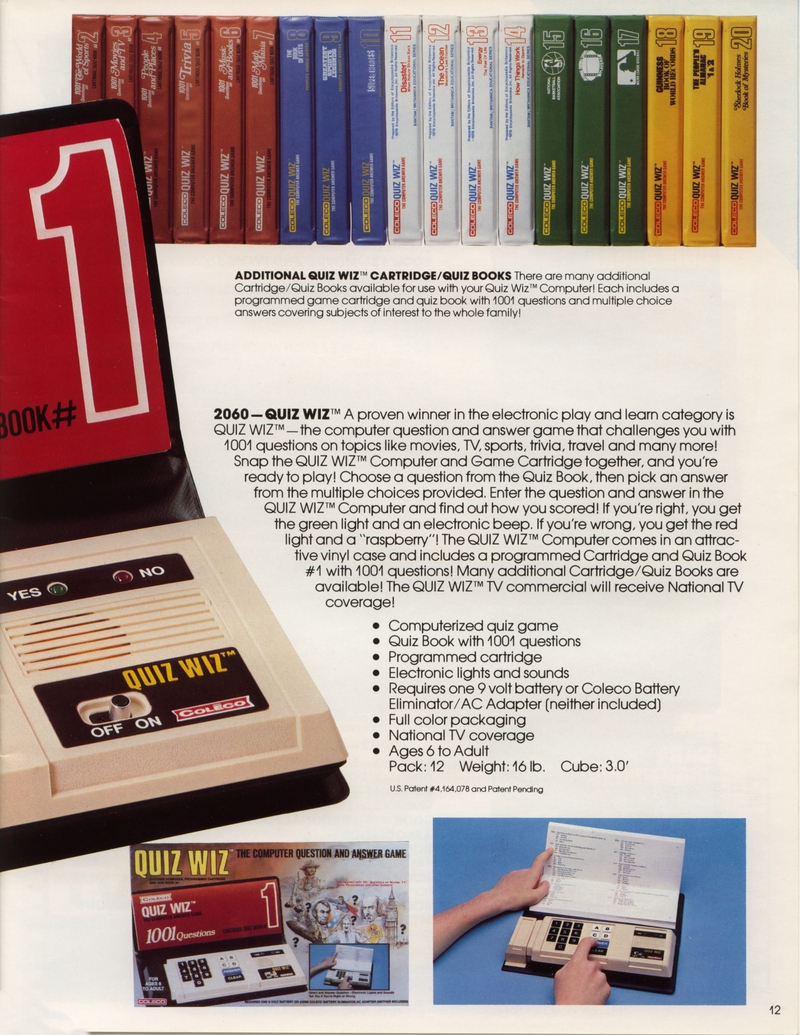
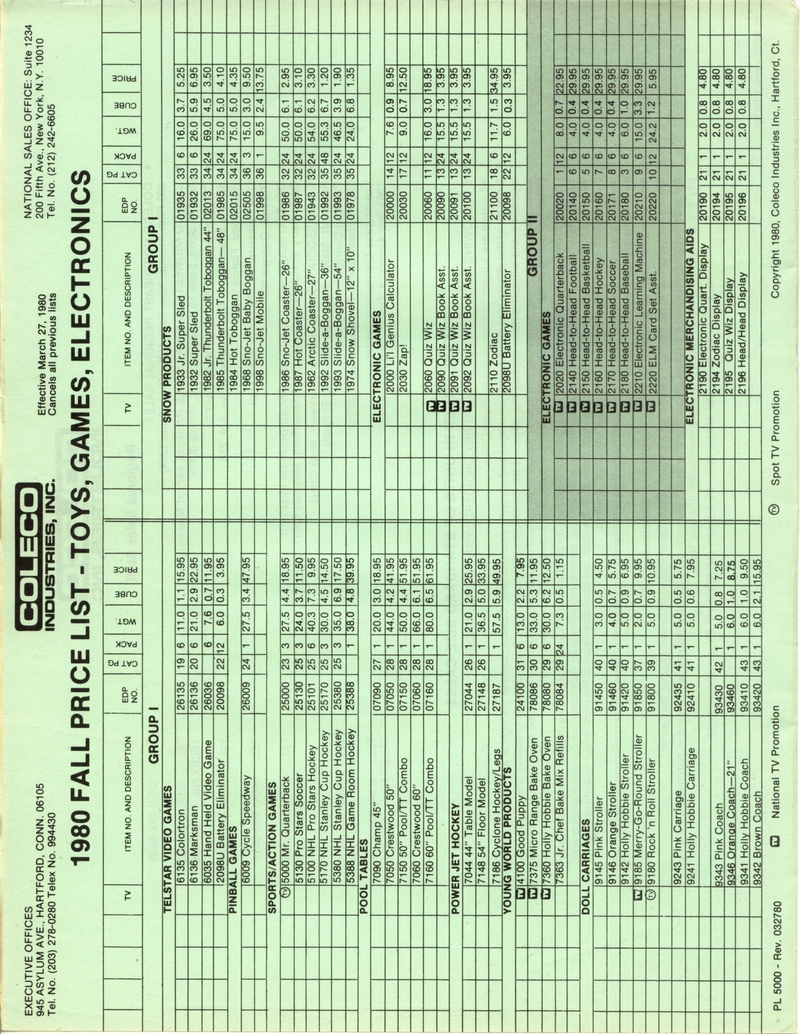
I made a nice little addition to DIGITIZE.TEXTFILES.COM: The 1980 Coleco Catalog.

If you don’t remember getting a Coleco catalog in the mail at some point, don’t be worried. This particular catalog went out specifically to stores or purchasers for chains. It’s directed toward people who buy by the box or the truckload, and so the tone of the catalog is how the items you buy will be supported by a television advertising campaign, and the main measurement is how big the boxes are so that you know how many you can stack in your shelves.

Beyond that, of course, all the toys in this catalog are presented as exquisitely as possible, with close-zoomed photos, and small framed shots that try to emulate the television commercial.

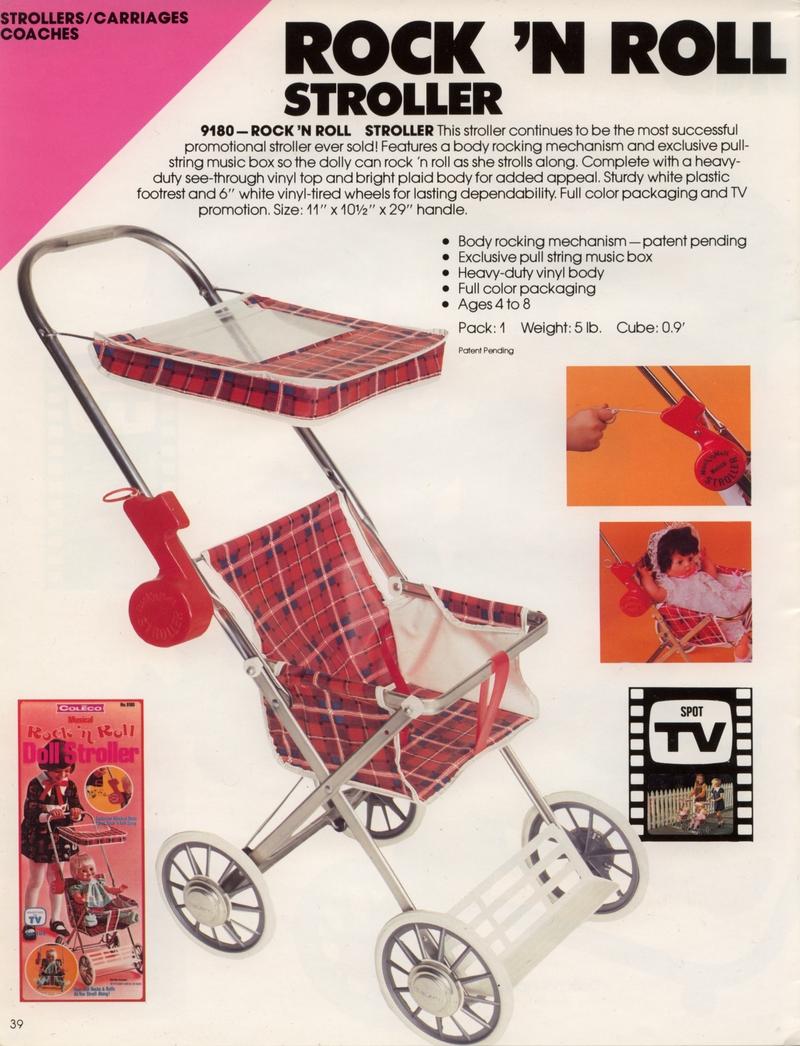
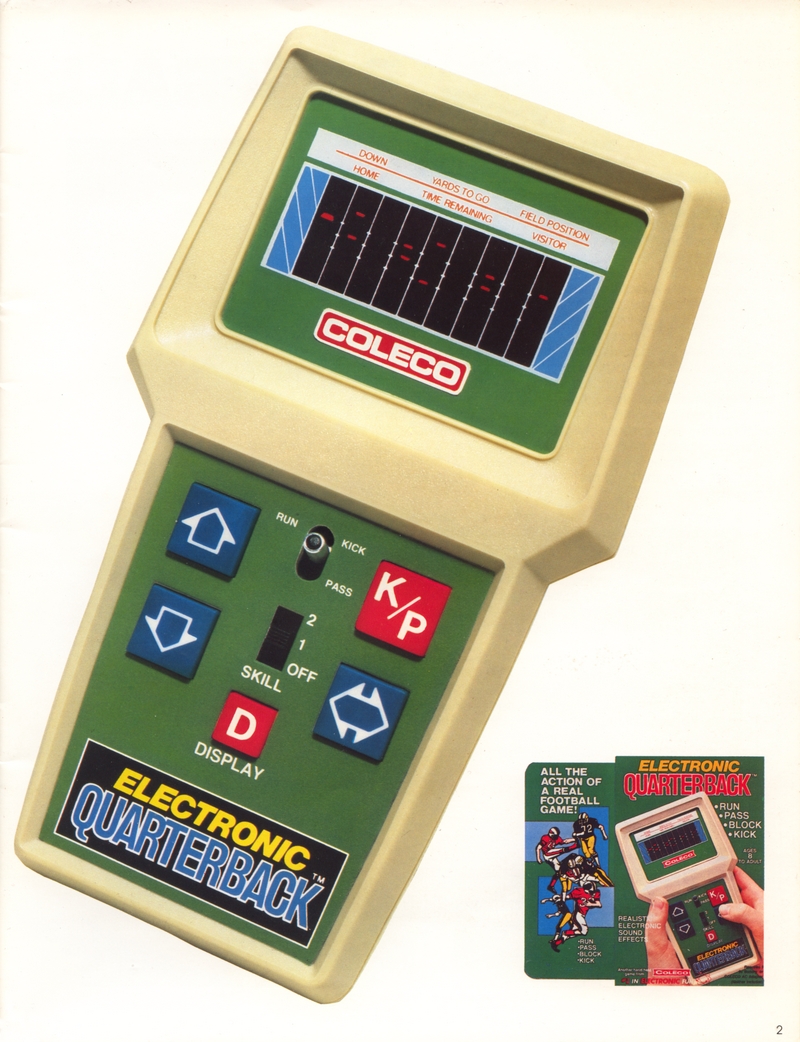
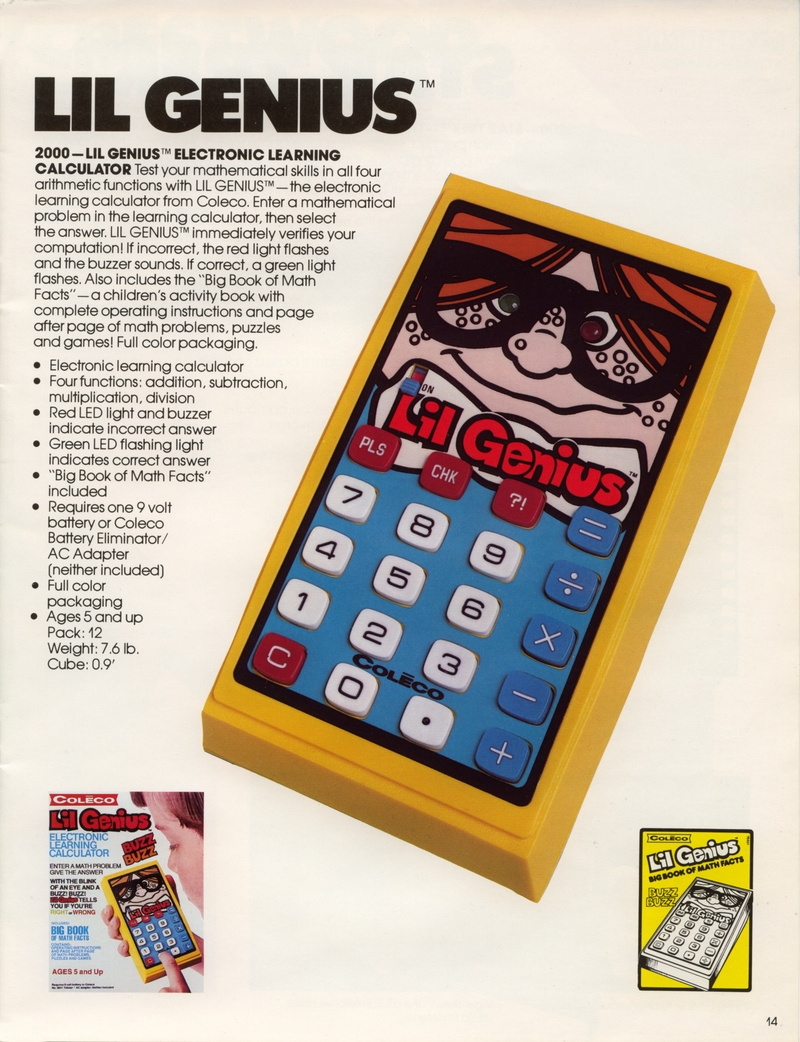
For a lot of people, the electronic games will hold specific interest, although I supposed the Rock n’ Roll Stroller might invoke a memory or two. More likely, though, there’s a lot of people who remember things like the Electronic Quarterback or the Lil Genius.

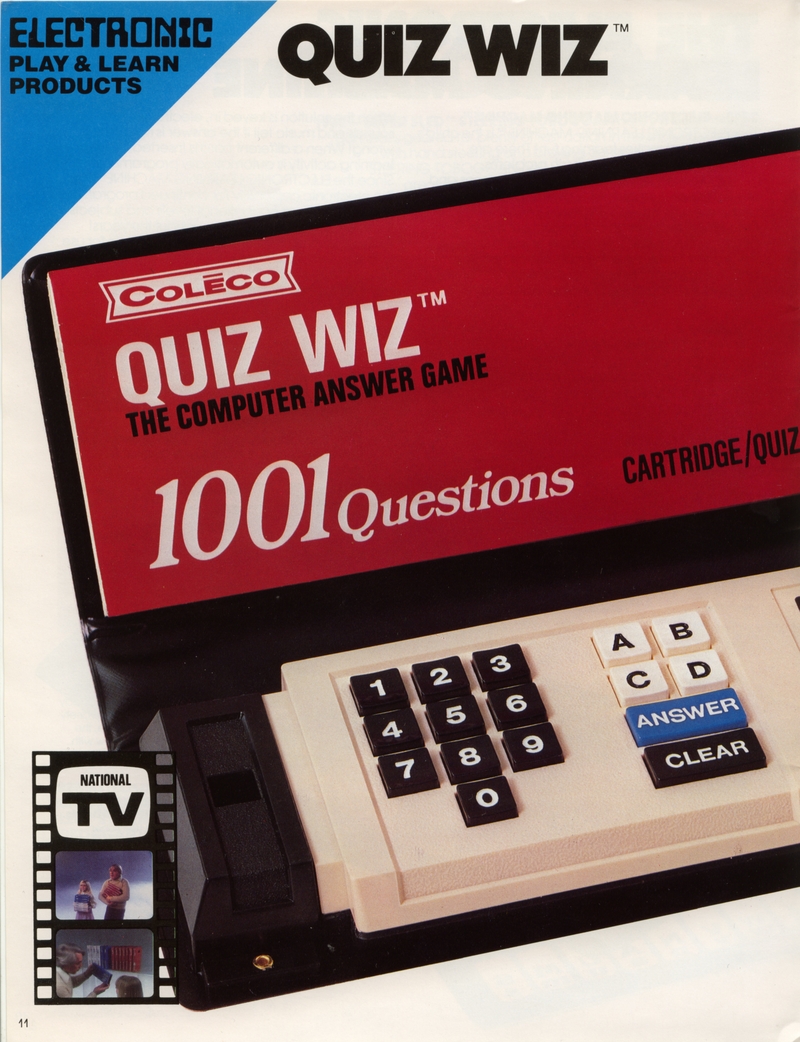
One particularly notable toy is Quiz Wiz, which was essentially a paper-based quiz machine that had all of the answers stored on a chip. Therefore,. it had a very large library that covered a ton of subjects, including Major Leage Baseball and the People’s Almanac, I remember a lot of Quiz Wiz commercials.

But I think the most interesting case of me having a different look at things with an adult’s eye would be the Slide-a-Boggans, which are nicely wrapped up in a pretty box and have a nice brand name and all… but they’re plastic sheets! Thick plastic sheets! And if you check out the price list, you can see they were wholesaling at between $1.20 and $1.90 based on which of the models you wanted, either big plastic sheet or bigger plastic sheet. So imagine what the markup must have been for a stamped-out piece of plastic with a box around it. What a racket!

I picked up this catalog along with the 1981 catalog (which is much larger, but still predating the Colecovision) at the MIT flea market. For the first tme in memory, I actually had to haggle with the guy over it, because he wanted $10. No way! I paid $5, which was still too much, but I felt good knowing it’s be all over the world within a short time. And here we are.

Coleco went bankrupt in 1988, and was bought out by Hasbro in 1989. It had been founded in 1932 by Maurice Greenberg, and his son Leonard announced at the beginning of this catalog that Coleco would be “The One” for product, promotion and delivery. At this point, in 1980, they probably thought they were at the top of the world.

Isn’t life and scanning grand.


Chip or London —

Isn’t that how it always is? I am going to be in London for a week doing interviews for my documentary and also speaking at a convention (about Wikipedia, this time), and I realize the time I’m going exactly matches a real incredible chiptune festival in New York City:

BLIPFESTIVAL.ORG

This is fly-to-NY-and-rent-a-hotel worthy. Days upon days of top-notch 8-bit, chiptune and electronic artists performing in one big show. This truly breaks my heart I will miss this.

So go in my place and have a great time. If you need me, I’ll be in London.


Artscene! —

Simon of Legaltorrents (and a bunch of other cool stuff) asked me if it was OK to put an episode of the BBS Documentary up on his website of cool crap to download. How could I say no, both by license and wish? The thing is licensed so that he could put it up without asking, and in fact he asked me to give him the best “rip” I could of it. So I did, along with a bonus promotional film at the end (about 60 seconds) asking people to buy the documentary.

The website is here: http://www.legaltorrents.com/

I guess if you were actually on the fence about whether to buy this documentary DVD set or not, you can go ahead and download that episode and get an idea of how it looks; of course, no director’s commentary, no subtitles, and no sense of well-being clutching the kick-ass packaging while you watch, but I bet a lot of people will get by.

It’s ARTSCENE, which covers the ANSI art scene of the 1990s. Check it out if you haven’t already.


Leave a Message —

I got a mail just this week:

“So, I have a collection of a few hundred megs of MP3s of voice mailboxes run by hackers in 1990. Do you have any suggestions on who I should give them to or what to do with them?”

Why yes, I said. yes I do.

Only one or two directories are properly described right now, but I’m sure I’ll get to them all, and fix mistakes as they go. I try to get the proper nouns and handles in there, so that it shows up on search engines. That way original people who might be mentioned in the recordings can tell me they’re in there (if they want) and give more context.

These are basically hacked voice mailboxes from a week in early 1990, where the contributor called a bunch of them and recorded what came out. Some recordings are fuzzy, others distorted, and yet others utterly devoid of content, but they represent primary source material; here’s what voice mailbox hackers, kids trading codes and offering information sounded like. There’s a bunch of handles in there: Crowfly, AK-47, Phoneman, Scandal. A bunch of kids (you can hear the slang being used) just looking for the next free box, the next open system to leave a mark on.

This was all sixteen years ago. If these kids were 15 back then, they’re 31 now. I hope that some 30-something office worker idly types his old handle into Google, sees a green screen full of files, and then says those words that are music to my ears:

“Oh, shit!”


Review: Commodork —

As someone who is bathed in Bulletin Board System (BBS) history nearly every waking hour, I can sometimes feel like I’m the only one going completely out of his way to find narratives. It’s easy enough to copy together a bunch of floppy disks or scan a bunch of printouts but that’s not really the glue of what put the online world together and why it still holds a strong meaning for people who were there. As a result, I’m always seeking out people to tell their stories from a personal perspective, or at least take a good shot at putting together the human side of the whole BBS era for the sake of those who missed it. If I’m lucky, I stumble upon a few sites where people do a great job of cobbling together what they didn’t throw out from their teenage years. I might even find an extended story out on a website, spanning multiple pages.

With Rob O’Hara’s book Commodork: Sordid Tales from a BBS Junkie, I believe we have the world’s first BBS Memoir. Weighing in at around 160 pages, O’Hara covers his life from 1977 through to 2002, tracing the effect that Bulletin Boards, videogames, and computers have had on his life. Just 33 years old, it might seem strange for someone to write an autobiographical narrative so soon, but like a lot of youth who’ve grown up in the age of the home computer, O’Hara’s gotten a lot of living done in that short time.

This is a self-published book, or more accurately, an author-controlled book. It is currently distributed by Lulu.com, an on-demand printer that provides you with a very “book”-looking book that you would be hard-pressed to think didn’t come right off the shelves of the local chain bookstore. The only difference is there’s no professional editor jamming through the work before it gets to you. It’s easy to find flaws in a lack of slickness and flow in a self-published book, but also no real filtering out of “the good stuff”, either. So I think of this book as a real sweet homebrew creation, rough-hewn but full of heart, not unlike the boards it talks about.

Because of this, the first few dozen pages are choppy. O’Hara works his way around his memories to find his voice: He tries to explain what it is that drives a person to still keep a pile of Commodore 64s in his garage, or build a 20-machine arcade in his back yard (the author includes a picture of this great-looking playroom), or even to want to talk about this history in the first place. He covers it from different angles: the urge to be a collector, the nostalgic dad remembering his carefree days, and the computer guy with the cred built up from now-decades of experience with the machines. He also struggles, initially, with who the book is for: folks completely unaware of the history of the BBS and home computers of the 1980s, or other 30 and up computer geeks who want to take a joyride through a shared childhood? In doing so, he actually touches on some great thoughts on what attracts people to old pieces of plastic and microchips, and why things were so different for him.

A sixth of the way in, O’Hara dispenses with the helping hand, cracks his knuckles, and goes in whole hog. Instead of asking if anyone gets it, he assumes you’ve gotten this far because you want to know it, jams the wayback machine into full throttle, and plunges into the world of BBSing for a teenager in Oklahoma. Except, of course, it’s really every BBS kid’s childhood: The little bargains, the quiet victories, the betrayals, the triumphs.

The heart and soul of the book actually are warez. Warez in the old sense, of newly-acquired one-off floppies of games, painstaking bargained for, traded, and spread out to gain fame and reputation. Throughout the book, it comes back to the warez, and O’Hara does an absolutely fantastic job of capturing the sense of power and expression that engulfs a teenager who has been able to use his skills or his patience to get his hand on a program that nobody else has and then turn around and use that slight lead to his advantage. The methods he uses are laid out in brilliant detail; one involves registering with bulletin boards in a city his family will be vacationing in shortly, allowing his far away “exotic” location to be verified by the system operator, and then traveling to that city and leeching them dry for a free local call.

O’Hara never lets it get dry and technical; it’s about people he met while trading software, the kind of people who he partied with, got into fights with, or loved. He’s not always nice and he’s not always the hero; what really rings true is how none of it feels pumped up or faked, dressed up as some inherently soul-searching activity where every moment in bristling with poignant meaning. That said, some of it rings very close to the heart indeed.

In fact, this book’s greatest effect may be the touchstone it provides for one’s own experiences. Even as Rob’s younger self is getting drunk at a BBS party and stumbling in panic from a perceived bust into the flatbed of a parked truck to sleep it off, I’m harkening back in my own mind to events that accompanied my BBSing that I’d forgotten wholly and totally. But I was there again, saving my own warez for the right moment, meeting my own soon-to-be-lifelong friends, making my own grievous mistakes. Anyone who used BBSes for any period of time will want to run to their keyboards and tell their own story; I see a lot of long e-mails in Mr. O’Hara’s future.

One small disclaimer: On page 14 of the edition of the book I have, Rob mentions my BBS Documentary, but just to say it’s not what he was aiming for with his book. And he’s right; we don’t step in each other’s territory and his book does what my film couldn’t; go front to end on one boy’s story to turning into a man online. And for that, I thank him, and I think a lot of others will too.

Is it for everyone? No way, but a book that takes on its subject so intensely shouldn’t be. If you or an older sibling or parent touched a plastic-and-metal home computer, sipped your bandwidth through a modem, or held a 5 1/4″ floppy disk in your bag to give to someone else, this book is your book. It might even be your memories, too.

It’s a good book and can be ordered through Lulu or directly from the author, who sells autographed copies.