ASCII by Jason Scott

Jason Scott's Weblog

Leet —

I don’t know why I care, but I do.

The sudden web-mainstreaming of “LOLCATS”, or “Image Macros”, inevitably leads to a discussion of the genesis of this weird way or writing stuff, which leads to some mention of “Leetspeak”, which then collapses into a pile of speculative jelly as to where the hell all this weird writing style came from.

“LOLCATS” itself has one general goal at this point: to drive traffic towards advertising. Good luck finding any site that isn’t caked around the little bastards with ads of every stripe; I sure couldn’t. Even BoingBoing, which resembles a NASCAR entrant these days, gets a bit of the tasty pie. Personally, I dig the whole fucking-around-with-images-and-adding-text thing; it’s been around for a very long time in various amounts and when it’s funny, it’s really funny. Like any fast food, it’s not good to make it your steady diet, but it doesn’t hurt to jump into the stupid and make stupid angels every once in a while.

But the whole “Whence does come the Leetspeak” question is always handled kind of oddly, although I’m happy to say that it appears the knee-jerk response is no longer that it was invented 5 minutes ago. People harken back to 2001, to 1995, to 1988… not bad! Wrong, but not bad.

Boing Boing links to an essay by David McRaney which links to the Wikipedia article which then links to this article by Anthony Mitchell. In it, he basically pulls a theory out of thin air:

The cultural attitudes and some of the early slang behind leet can be traced to the 1970s and early 1980s, the heyday of the phone phreak era. During that era, individuals and informal groups sought to explore the public telephone system in the U.S., often to make illegal long-distance telephone calls. The most proficient individuals in the phone phreak subculture received recognition and status that enabled them to become cultural bellwethers.

When computer bulletin board systems (BBSs) became available in the 1980s, phone phreak culture gained a written medium in the online exchanges that were often so slow and clumsy that users would shorten words or phrases to be able to send messages more conveniently. For example, ‘you are’ or ‘your’ could be shortened to u r or ur.

Short leet forms are commonly observed today in SMS Latest News about SMS (Short Message Service) text messages composed on mobile phones. The popularity of leetish truncations on SMS is driven by the keyboard designs on most mobile phones. While computer users have access to full QWERTY keyboards, on most mobile phone keypads each button is shared by three letters. Little keypads encourage leet.

Uses of leet that substitute numbers and punctuation marks for letters can be traced to the 1980s when bulletin board administrators sought to discourage the use of BBSs for the storage and distribution of pornography and stolen software. To circumvent BBS restrictions, spellings and words were altered by some BBS users. Enduring relics from that era are the leet terms pr()n and pr0n, which signify pornography.

Another relic is the translation of the word hacker, which was banned by some BBS administrators. Initial leetspeak translations to hack0r or h4cker led to filtering and bans on those leet terms, pushing leetspeakers to develop more obscure, less recognizable translations such as h4x0r and |-|^><()|z.

To his credit, this is listed as an “opinion” piece, not an academic work, and so he feels absolutely no responsibility to cite any sources for this belief. The fact that Wikipedia then cites this speculation in a manner that makes it look like it’s an informed statement shouldn’t be a huge jaw-dropper either.

I care about this because I spend so much time collecting BBS stuff, and to watch someone randomly make up sources for these things and reasons that I’ve never heard of ever, it’s just a tad frustrating.

I’ve got an entire directory of printouts from circa 1980s BBSes, early stuff, which shows that nobody was trying to get around any sort of filtering system. Crap-ass ideas like trying to regulate your users to that level are spotty at best in BBS history. And it certainly didn’t stop people from talking in that way.

I traced the meaning of “K-Rad” some time ago. I found the specific place it came from. Watching the entirely made-up histories of the phrase show how tenuous a connection can be drawn between history and speculation when reading about where stuff “came from”.

LOLCATS, in case you want to play history tracing games, definitely links back to Amos and Andy and 1800s-era renditions of black language. Directly? No, but it exploits along the same lines of pseudo-infantile language portraying complicated (and not so complicated) concepts in a messed-up manner. And done right, that shit is funny! Done wrong it’s insulting and boring. Actually, sometimes it’s done right and is BOTH insulting and funny.

And you can cite that!

Anyway, I can definitely tell you that the weird “1 for I”, “0 for O” stuff was already a cliche by 1984, with the Real Pirate’s Guide by Rabid Rasta mentioning this:

REAL PIRATES DON'T SAY "K-K00L", "K-AWESOME", "X10DER", "L8R0N", OR ANYTHING OF THE SORT.
REAL PIRATES KNOW THE DIFFERENCE BE- TWEEN "F" AND "PH" (I.E.  "PHILES", "PHUCK", "FONE", ETC.).
REAL PIRATES NEVER USE TEXT GRAPHICS IN THEIR MESSAGES.
REAL PIRATES DON'T SEARCH FOR NEW WAYS TO SPELL "WARES".

I spent an enormous amount of time six years ago annotating the Real Pirates’ Guide, so go enjoy that if you haven’t seen it.

The point is, primary materials abound. Stop making shit up, it drives everyone putting the primary materials online nuts. LOL.


Locks —

An interview conducted with an IF author put me in the Providence, RI area, 40 miles from home. While in the short term it might seem to be efficient and businesslike to zip in, do an interview, and drive back, the day was beautiful and Providence can be lovely if you squint. I ended up walking along a nice area of shops and found myself in an antiques store named What Cheer that had a fun little assortment of old stuff. Items are plentiful and often well catalogued, although it would have been multiple days to truly find the gems I’d normally want.

In a card-catalog drawer set they keep of tiny and interesting items was a slot for old locks, although only one was resident that day. I bought it handily. It looks like this:

My current plan is to donate it to the lockpicking village, which is a travelling set of locks that follow along to various hacker events and which I’ve never partaken in. Why? Not quite sure. You’d think I’d like it handily, but for whatever reason I’ve always demurred. It’s definitely not because of the event: the people are friendly, some of them I’ve known for years, and the arrangement of materials is always top notch:


Lock picking, like a lot of other activities, can imbue you with a sense of power and ability due to the skillset that provides you access you might not otherwise have. The groups that have followed hackers around for years now have given untold hundreds a chance to understand more about the theories behind lock creation, and for reasons I can’t quite fathom this appeals handily to technical people of a specific stripe. My own lack of understanding aside, TEXTFILES.COM has an entire section on lockpicking with Master Locks coming under strongest scrutiny. M. Groves, a particularly cranky commentator on my weblog entry about the mystical number last Friday, will be glad to know that Master Lock sent out threats to people for printing how to undo their locks, even though what these files represented was research using items they had purchased, and which revealed pretty insane flaws in the Master Lock system.

Locks are, after all, event consolidators, in that they prevent a range of events from occuring by consolidating them into a specific event; the triggering of a mechanism within the lock that causes it to release its hold on whatever it is attached to. The flaw or deeper issue, known for thousands of years, is that this in itself is not the sum total of required variables to prevent another event from happening. The strongest lock on a door won’t protect against a window next to it, or exposed hinges, or the key being accessible to the wrong people, or the wrong people being able to imitate a key.

This particular lock, an old Yale one, was either used for railroad switchboxes, or maybe just someone’s shed. Naturally, I assume it was used to secure some sort of gate of Hell, long since undone and now leaving a brave band of heroes the task of gathering up the demons to return them from whence they came. Maybe they need their lock back!


Seedy Textfiles —

I got another nice letter today along the lines of “I’m sorry to bother you… oh god, don’t hit me… please, what’s going on with CD.TEXTFILES.COM?” Sure, there’s a lot of people who write to me like I’m the Super and they’re getting no heat, but others write with an overarching deference and politeness. So here’s what’s going on.

When I moved textfiles.com to colocation, everything went except for ascii.textfiles.com, bbslist.textfiles.com and cd.textfiles.com. This was mostly, in the case of ascii, because of programming setup, and in the case of bbslist and cd, because I just hadn’t gotten around to it. Later, I didn’t move cd.textfiles.com because there’s no room.

Right now, cd.textfiles.com is rocking along at 216 gigabytes of data. That’s larger than the space on the www.textfiles.com machine, currently. I know, behind the times, but that’s what the current situation is.

So, some time ago, I thought about getting a little more drive space installed into the main textfiles.com server so I could move cd.textfiles.com up there. But I kept putting it off, because hey, it worked great for me…. I had to put a bandwidth limiter on the site, you see, because it was getting ugly. Way ugly.

The interaction people have with cd.textfiles.com brings great meaning to the term “tentacle rape”. I’ve seen people open fifty, again, FIFTY, 5-0 connections to cd.textfiles.com to yank it dry. I feel like I could go downstairs and watch the server implode like a kid’s juice box while this is going on. And they would do it for days and days and days. Endless attacks on all sides.

Also, because there are well over a million files (I think the number’s around 1,200,000 files or thereabouts), I would always, like, 24 hours a day, have spiders downloading stuff from google, yahoo and the rest. People might say “Hey, you should stop them”, but kind of the “point” of cd.textfiles.com being on the web was people looking for stuff. So if I didn’t have it searchable, I’m being a dope.

Anyway, I got a really nice letter from a guy, and he pointed out an interview in which he said this stuff:

Basically, my site could not exist without cd.textfiles.com. That site, I am not kidding, is the greatest website of all time. They’ve uploaded hundreds of shareware and freeware compilation CDs, archiving thousands of games, utilities, applications, and anything else you can imagine. It’s shovelware paradise. The quote on the first page explains it perfectly. “Who knew that the companies looking for a quick buck through the late 1980’s and early 1990’s with “Shovelware” CDs would become the unwitting archivists of the BBS age? No one did, but here we are, looking back, muttering thanks to these souless (sic) con artists as we plunder the very data they themselves took from a time now past.”

“Their data, of course, isn’t categorized and catalogued like my site. You can’t just go to the site and browse through games by publisher or genre, find specific version numbers, purchasing information or declaration of freeware status, links to the author’s website, or read in-depth reviews. cd.textfiles.com is a library. If you’re willing to search it, you can find almost anything.”

“There are very few websites that I trust to take my downloads from. I have to be sure that every zip file is unaltered, meaning that no files are missing, have been added, no config files have been altered, the version number or copyright information hasn’t been hacked or hex-edited in, and no saved games or high scores are present, which is almost impossible to guarantee on other websites. Each file has to be exactly the way the publisher released it, and free from viruses, malware, or corruption. To be sure, some of the zip files on the shovelware CDs have been altered. Sometimes the BBS guy would play a round of the game, then re-zip the file before uploading it to his BBS. Perhaps he or she played the game in order to write the file_id.diz description. So some of the zip files will have high scores or saved games, or add an advertisement for their BBS into the archive. The wonderful thing about cd.textfiles.com is that, having so many sources, I can usually find several copies of each version of each game, and I compare them to make sure that I have an unaltered original. True research requires the citation of multiple sources. Some of the CDs only contain altered archives, so I’ve learned which CDs are trustworthy and reliable sources of unaltered zip files. cd.textfiles.com is one of the few websites that I trust as a source of downloads for my site. Without them, I would be able to offer the most recent version of most games with confidence by taking them from the publisher’s website, but I wouldn’t be able to archive entire version histories, which is what sets my site apart as a preservationist and archival society.

“Like any library or museum, they don’t even know what hidden gems they have in their archives. I found multiple copies of Major Stryker v1.3 on their site, a version which Apogee claimed was never released. My discovery changed the official Apogee FAQ. If you know what you’re looking for, you can find incredible things.”

So that’s really cool. I’m going to go buy a 750gb drive, get that installed in the colo machine and we’ll see about returning cd.textfiles.com to full accessability. Amazing what a kind word can do.


Where Have All the Philes Gone? —

There’s an article in the Autumn edition of 2600 called “Where have all the Philes Gone?” It’s horrible. I’m sorry I only became aware of it recently; I don’t read 2600 much anymore. I don’t understand why 2600 doesn’t have a PDF version of itself available for a subscription fee or otherwise downloadable. I wish they’d spend a week or two over at the Escapist Magazine for information on how people put together a magazine (with text-only version, web version, pdf versions!) in the modern era. As a result, I didn’t know about this article until over half a year later.

Again, the title is “Where Have All the Philes Gone” and discusses BBS textfiles, their place in history, and thoughts about what the present holds in contrast to the peak of the textfiles. It gets everything nearly completely wrong. It was written by “Glutton”, in case the search engines needed a way to match “glutton” with “gets everything nearly completely wrong”.

Riddled with mistakes and worthless speculations, I defy the core thesis of the article: that BBS-era textfiles are no-longer available in any number or being written in a useful fashion, and this supposed state of affairs is a result of newly heightened fear of accurate information being printed for fear of lawsuits, arrest or, I assume, taxidermy.

For one thing, he makes it sound like BBS textfiles are scattered to the four winds, barely able to be found if you use “filesharing sites” and “search engines”. Well, I know where a few are lying about, so that’s pretty silly in itself.

The article constructs a pretty cramped and inaccurate presentation of the last 20 years, painting a false paradigm about information along the lines of “everything was open and new users were treated with respect, now the government and law enforcement have killed free speech and expression and new users are mistreated”. It’s a pat construction, very easy to swallow, almost sounds informed and wide-thinking.

But it’s not; it’s the kind of stuff you write because you need to fill a couple columns of space and you sort of remember you had a good time on BBSes and so let’s talk about how current forums seem to suck.

Current forums don’t suck. They’re capable of a lot, and when they fail or don’t do things well it’s instantaneously knowable, as opposed to BBSes of yore where if something sucked you had to wait months to really be sure it sucked. Things move faster now. They grow faster and they die faster.

But through it, we have so many more avenues of accessible information. Textfiles are still being written. Some are in PDF form, some are in HTML. It’s not as portable as text, but it’s still pretty damned portable, considering. The fact is, there were a very small amount of bulletin boards compared to websites, they often allowed a single user at a time (meaning maybe 100-200 people total for usage) and the quality was about the same, just in a smaller area. Nowadays, you can have response to a written file within minutes of posting it, not days and days. Things are different now, and better now. Even cursory study of the exhibits reveals this.

But apparently doing more than writing a couple column inches that say nothing, and say it inaccurately, counts as useful information in 2600 these days. I’m sorry to hear that. Here’s the article, all nice and poorly scanned like it deserves to be.


Five Days a Week —

I’m knocking the weblog schedule back from six days a week to five, basically posting on weekdays, with the occasional huge honker on the weekend if something important comes up. I’m having trouble maintaining that jet-setting, here-and-there lifestyle of a computer historian and dependably posting entries on the day they were written. Twice I’ve had to go into bouts of back-dating entries and that’s wrong.. it’s just lying for no good reason. After all, it’ll eventually work out that I’m writing an entry describing an event that hadn’t happened by the time of the “date” of the posting and then you’ll kick me to the curb. So let’s depressurize the situation now.

A part of this is that I’m not interested in being a link/comment weblog, where all my weblog entry does is tell you to go somewhere else. I think that’s boring and can be done by a script. Instead, I insist on giving context, commentary and insight into an event and use links to bolster it. This has turned out to be hard work. Hooray for hard work!

So five days a week, and I will note in an entry the actual day it was written if I mess up. Historian’s Honor!

Note: This was written on Sunday, May 6th.


09 F9 11 02 9D 74 E3 5B D8 41 56 C5 63 56 88 C0 —

I think of it, and I laugh.

I consider the implications, and I laugh harder.

It’s a deep laugh, the laugh of realizing that you locked your lockpicking set in your car along with your keys. The laugh of the fact that I spent $70 on a digital sundial. And the laugh of remembering that asshole manager at the multiplex in 1988 who was using a goddamned bullhorn to direct people into lines to see Batman and how I not only let him do it, but happily sat for an hour inside a theater waiting for the movie to start. To see Batman!

In other words, it’s the ludicrousness piled on top of the stupid, the hilarity baked into the self-obvious bad idea, the on-its-face clarity of the totally untenable plan accompanied by the energetic, totally-cognizant shout of “onward to victory!”

To think we let things drag down until it got to the point that any entity, any entity at all considered itself the owner and protector of a set of 16 hexadecimal numbers, and not just the beloved guardian of this precious collection of letters and digits but one which would then attempt to cow and bend all the world to its will to remove all trace of this combination from the internet.

That they would do this isn’t a big surprise; groups do stupid things. But the fact that there’s a law on the book they could point to that would allow this to even be potentially actionable is what stacks on another layer of Moron Flapjack into the breakfast plate of this event.

In case this event hasn’t made itself to your corner of the world, the string in my entry’s title does something. I’m not even entirely sure how, but if you do all sorts of insane shit and plug it in the right place you can copy a movie. Maybe. The resultant movie is then going to be gigabytes huge and probably star Hugh Grant but damn, you now can have a copy. If you use this number. Somehow. Again, I don’t even know entirely how and I really, seriously don’t care.

Most people wouldn’t care, actually. Copying movies happens; it certainly happens to my movies, and it has been going on since… wait for it… forever! Movies used to be duplicated back in the “play it in a tent” days of over 100 years ago, and there were companies that would pirate/dupe these reels and then send them to countries or districts without copies of the movie, and make money at it. So yeah, that’s been afoot for a bit of time.

But what made people care was that there were actual lawyer letters sent out, threat-o-matic missives saying that this number was totally and utterly illegal and you should stop printing that number because there’s a law on the books that says that this thing is a device and method for circumventing copy protection and that’s illegal and hey stop it and oh shit you painted it on a wall.

The closest I could come up with to this happening in recent memory is Major League Baseball trying to copyright or make into trade secrets the score of a game. Two numbers! Ours! All ours! They were dumbfucks then and are dumbfucks now. But even that was very specifically directed at other businesses who were then selling access to those numbers, so maybe, you could convince yourself it wasn’t in fact Major-League Stupid.

We have entered the hopefully-short era of the Microtheft, the smallest possible unit of larceny, the atomic level of sin. We’ve boiled down the act of being immoral to one string of numbers being in your possession, one collection of digits representing you being bad and worthy of punishment. And the punishment is fucking crazy. Do I hear years? Years for printing this string?

Bring that shit on. The resulting fireworks of all these are delicious, like a ice cream sandwich on a ferris wheel in a breezy August afternoon. This is something that people get, they understand. Maybe this is the wedge where a critical mass hits and laws are changed. Stupid, stupid laws that get in the way of good laws that help the world.

Here’s the letter that’s been sent out to places, in case you think all those stories were fake.

Bring it on! I brought cake, fuckers!


A Little More Front, for Context —

It occurred to me to mention a couple more things about this video shoot from the previous entry. People who are shooting stuff might make assumptions about how I did it, and those assumptions might be quite wrong because I didn’t give information out. So, here we go.

  • The video cost me roughly $50 to shoot, because most of the infrastructure was already in my possession, such as the camera/av equipment, set and props. I’m already shooting a film, after all, so this was something shot entirely on the side while the “main” production was going on. If I’d had to rent equipment and a location and decorate it and all that, it probably would have been around $3,000-$5,000. This is my case for re-use of available materials! Cost included lamp oil (no kidding!), and beer and gas and so on. All minor stuff.
  • I did roughly 10 test screenings with various people, to get feedback. Shots were removed and others added based on this. One glaring example was that I did a “shaky-cam” shot with Frontalot rapping that I liked and which I thought really fit in. Nobody else thought this, they all thought it looked amateurish and crap. So out it went. On the other hand, I had one of the crew (Oliver) note how there was a lack of a computer screen shot during a sequence when it really could use one. When I threw one in, it was like watching gears engaging. That was Oliver’s doing. So while I’m the director, and likely the final word, all ideas did not spring from me; they sprung from many other folks.
  • I have watched this video over 500 times. I would just let it run and contemplate it, see where it felt smooth, see where my mind hiccuped watching it, watched just the background, just his eyes, just his mouth, and so on. Nothing beats careful study of the actual thing you’re working on. This approach is also why the BBS documentary took 8 months to edit.
  • There are shots of Frontalot typing at an Apple II from the Apple II’s perspective. To get this shot, I removed the monitor, mounted the camera low on a tripod, zoomed, and stuck a really thick book underneath the Apple II so it was aimed up at a ludicrous angle. I.e. the entire thing is unbelievably faked up. It’s amazing how much you often have to fake stuff up to make it look “real” on screen. There’s nothing wrong with this, but I sometimes wonder how much nascent filmmakers see things and try to do it like they think it’s done, instead of how it’s actually done.
  • I am a completely spastic director working with people towards a goal, in this case, to be lip-synching to a rap song. I can hear myself going nuts on the recordings as I’m shouting out directions. A lot of this was just to not waste Frontalot’s time, but when you’re in the heat of trying to make stuff seem spontaneous, you say whacky crap.
  • There were three people helping me on the night of the shoot, and three others who helped clear out the space for the set. So that’s six people (plus Frontalot and myself) working on this project directly, plus the dozen people who were given the opportunity to give feedback about the project. A good project is almost never done as a solitary project, if you expect it to interface with other people.
  • I have now had G4/TechTV, Deth Vegetable, MC Frontalot, and Mark Hosler of Negativland in my basement. Someday I’ll let them out!

Pitch Dark Post Mortem —

The rise of “post mortems” in relation to games and other software projects is kind of interesting; it has rarely been the case that groups would trumpet what they did wrong or would want to change about something they just finished before. I suspect that for some it’s a case of being able to exorcise internal demons, or to talk through concepts or lessons that they might not otherwise explicitly regard. I’ve heard post-mortems that are basically a case of “Man, looking back, perhaps we just did everything so damned perfect we may have set ourselves for a lifetime of disappointment”, but I assume this is when the marketing/management gets a hold of the materal. In my case, the project is a video one, and I’m also the management, so that’s probably not going to happen.

So with that weird introduction in mind, let me write a bit about the now-completed “It is Pitch Dark” MC Frontalot video and my experience with it.

To recap, I contacted a large number of people in regard to the BBS Documentary and doing “stuff” for it. Among these was MC Frontalot Nerdcore Rapper exquisite. I like his stuff and I thought he’d be fun. Unfortunately, he indicated he was too busy. After the film came out, we bumped into each other at an event and he indicated that he regretted not contributing something, so I mentioned GET LAMP, and he signed on. A few months later, “It Is Pitch Dark” appeared, and we discussed the possibility of me shooting a music video. And he agreed to it, and there we go.

That video was officially finished last week (that is, I finally coaxed a few minor changes into the editing that nobody would notice) and delivered it to Frontalot. It’ll be released at his pleasure in the coming months in a pairing with the release of that song as a single. So this entry doesn’t have a link to the video, in case you’re scanning it for such.

I heard the song about a week and a half before the filming of the video. I’d heard a demo version a month and a half before that, so I knew the general approach, although half the lyrics were missing. A limitation that was made known almost immediately was that Frontalot was going on tour within a week. This basically worked out to about 4 potential shooting days, all things going well.

I had a meeting with Frontalot at the local hacking hangout (he’s staying locally to me for a while, which helped a lot) and we discussed ideas. I had a whole range of ideas of possible things the video could have, and he had ideas too. Frontalot had very little in the way of “will not do” rules to put down, and the main one we were both in agreement about: no parodying of other rap videos. That is, we weren’t going to put Frontalot into “bling” and make him pose near dubs and act like he had weapons and strippers falling out of his “ride” and all the rest of that. I told him clearly I wanted to make something where other people would find stuff to parody. That is, original new stuff.

The original plan was for two shoots; one at my house, and one on a nearby college campus. The idea behind this was to have a sequence where Frontalot plays a text adventure and you see video of him doing text adventure-like things, like trying everything against a door, trying all doors, and so on. Then, we’d have text along the bottom of the screen telling you what he was doing, and so on. I also wanted him to have a made-up “office” that he’d be working in, loaded up with references and items relevant to computing and games and nerdishness.

So, what worked out:

  • Frontalot’s a compelling video presence. This may sound obvious, but it’s not always the case and a music video director will get around this by shooting things so that the “star” isn’t the dominant feature. If you’ve ever seen a video where it appears that it’s more about the hot model or the animation than the band, and it’s a brand new band, then one of the contributing factors might be that the band itself isn’t exactly eye candy. In Frontalot’s case, I found his look to be very compelling, even in high definition.
  • Frontalot’s got good motion. I filmed him dancing in his geeked-out fashion from multiple angles and I think those worked out very well, and it gave me a lot of good footage to work with.
  • We were pretty efficient. I’d estimate we ran through the song or parts of the song about 15 times, and in about three hours of shooting came away with 45 minutes of footage. I later augmented this with roughly 30 minutes of additional shooting not requiring Frontalot, so his “workday” was kept nice and short.
  • The set decoration worked out. We shot in my basement, and I hacked up a sort of office into the corner with all sorts of equipment, boxes, and so people will find lots of vintage equipment to browse over in the background while Frontalot is on camera.
  • There’s an animation sequence using a fake map of an adventure game that kicks butt. It freaks people out when they see it for the first time.
  • Similarly, there’s a cameo appearance of someone associated with text adventures in it. This was also effective and worth the delay of a couple weeks to work out scheduling. Frontalot was well away on tour when this happened. So when he’s “interacting” with this cameo, they’re not in the same time zone at all. Worth the effort.
  • Shooting in high definition. I used the HD camera to do all this, and that thing takes great shots. Even though it has issues with low light and it’s weird to work with P2 cards instead of tape, I’ve gotten compliments from people about the image quality and action in it. When it shrinks down to a standard-size video screen, it looks spectacular. So yeah, HD’s worth it.

What didn’t work out:

  • A second day of shooting didn’t happen. I looked at the footage and figured we had enough, and that the “make Frontalot run around” footage would be a lot of work for little benefit. This was an intentional choice, but I was making it on the fly and that was a possibly unnecessary risk in terms of having coverage.
  • A second day of shooting might not have hurt. I didn’t need it in a do or die fashion, but giving Frontalot a day to mull over his performance and then bringing him back into the set to work with it further might have yielded additional footage and a gem or two. That said, he really was in top-speed planning mode for his tour and was happy he didn’t have to do a second night of shooting.
  • This was an odd song to do a music video for. Obviously, with my own selfish interests, this was a perfect song, since it’s about text adventures. But there’s no video for the main single, Secrets From the Future, and text adventures appeal as a subject to a reduced number of people who might otherwise find appeal in the main single. A lot of this is simply because Frontalot is not a massive signed artist with money to burn; this video was done for free as far as he’s concerned, so why not. But I wonder how much it’ll confuse people; the word “text adventures” never appears in the song, although any amount of listening to it tells you what he’s talking about.

The video that came out was probably 60% what I thought it would be when we started planning the shooting. To be more explicit, it’s 60% similar to my plans. It’s 100% good, and I gave a sneak preview of it at Notacon, to good reaction. It’s a great feeling to sit in the back of an audience and feel how it all plays out, and it does the job. I hope it sold a few copies of his album right then.

Would I do it again? Sure. The production time was probably 4 weeks with that being probably 6 days of actual “work” involved, either shooting or editing or screening or refining. I had to delay GET LAMP for a little while this was done, but what a bonus feature it’ll be on the DVD set!

Onward to filmmaking.


Happy Drive —

Back in the 1980s, there’s an event that occurred that is worthwhile to study, mostly because of the parallels to issues that are hitting us now. It’s relatively obscure (except of course to those who lived directly in it) and that’s a shame, because it has lessons to teach.

One of the inevitable things that happens with flexible (or semi-flexible) consumer hardware is that a bunch of little businesses spring up to make stuff “better”. A recent example are the aftermarket grips for Wii controllers, letting you add some extra grip and style to the smooth plastic surface and protect nearby pets and windows from your incredible onslaught of waylaid flying controller. This is a minor, but needed convenience for some people, while others are fine without it. Similarly, computing hardware has always had people willing to step up and provide whacky additional circuits, cartridges, utilitiy software and decals where the manufacturer either didn’t see a need or is unable to provide such a thing.

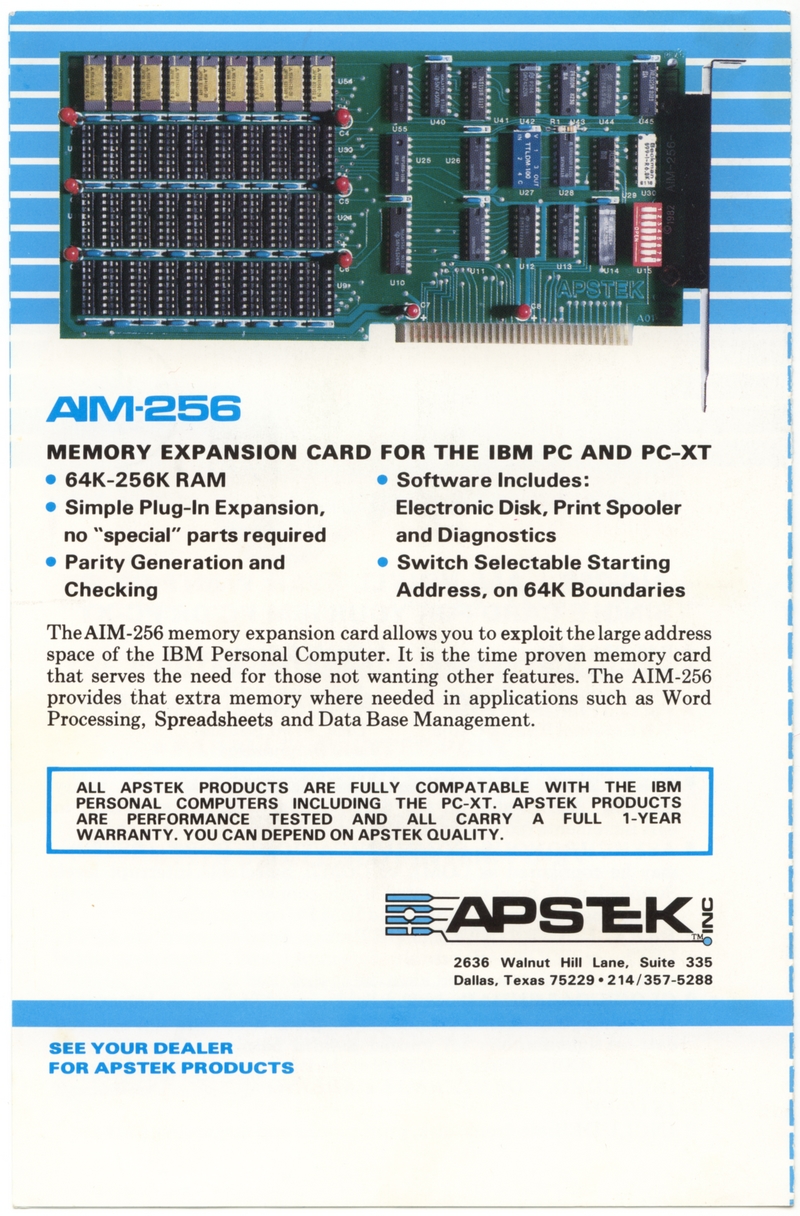
A classic example is a “print buffer”, a card that would sit inside a lot of different machines and take the “print” output of a computer and buffer it inside a bunch of RAM chips. Here’s a good example of such a card, providing extra RAM, the print buffer/spooler, and a RAM-based floppy emulator. In today’s world this may not seem like much, but it was a lifesaver and a completely different experience to use a machine with expansions like this. Just the gained time from being able to fire off a “job” to a printer or to save off a constantly-used floppy disk image could add up to recovered days.

Among this forest of microcomputer additions was a modification to Atari home computer disk drives: the “Happy Drive” from Happy Computing. It sped up the buffering of the disk drive so that interaction with the floppies were much more efficient… oh yes, and it totally shot all copy protection in the head.

The Happy Drive was capable of duplicating any disk you put into it. Period. If the disk had copy protection, it simply copied the copy protection as well. If there was a street fight between software companies and duplication of software, the Happy Drive was a nuke. End of story.

Here’s a schematic in case you need to build one. Actually, you can still purchase used ones online from various dealers and auctions. The page with the Happy Drive circuits also has a number of other disk drive modifiers, for context.

I don’t pretend to be capable of giving a universally accurate portrayal of the resultant scuttle of a drive like this coming into the world, or what software wasn’t created because this drive existed, or even how much its existence was noted by anybody. But I can point out a number of other things.

First of all, an item capable of making exact duplicates of floppies would have had limited usefulness to pirates in the classic sense. It’s one thing to make dupes for your buddies so everyone has a copy of Crush, Crumble and Chomp or Temple of Apshai, but this doesn’t scale; the cost of floppies becomes notably prohibitive, even with the overhead cost being zero. Additionally, you still wouldn’t have been able to transfer this software across modems or bulletin board systems, which meant you were limited to either people you knew or people you could mail to… again, running into the cost-per-floppy issue. Pirates worked/work by compressing or reconstituting programs into the smallest space available, for easy transfer, because no individual program has an overriding meaning of specific value. If you want to know what the most efficient compression approach is at any given time, just check what the pirates are into, and if you want a measure of individual program cost, don’t check with the pirates, because a $1,000 program has as much cachet or worth as a $39.99 one.

So the Atari world went from being one where duplication of floppy diskettes was an occurrence to one where it was an inevitability. Did it collapse entirely? No, it definitely lingered for quite some time after the invention of this drive modification, well over a decade at least. Did the software industry for Ataris dry up? It’s hard to say, because the home computer division Atari nearly imploded for good in the middle of the 1980s, switched hands, and switched directions. But I can’t seem to find citations for any situation where a software company, say a Epyx or a SSI, came out with any statement regarding the Happy Drive, declaring themselves staying or going based on it.

What’s worth noting is that this sort of “mod” still occurs, and has occurred with nearly every single home console system since the 1980s; a “mod chip” or other “fix” which causes the home console to either allow duplicated items to play on the system, or an ability to make “backups” of the games. Now, however, there are spectacular raids and attacks against vendors making such items.

But the fundamental issue is whether this sort of “nuke” is a “nuke” at all. It has the potential to cause issues along a specific vector, that is, the lack of ease of duplication of a disk. If a piece of software’s entire defense against being duplicated was trickery on the floppy disk itself, then this modification rendered that obsolete. But software needs documentation, and sometimes it needs hardware, and that’s not as easily duplicated. (At least, at the time.) Additionally, piracy networks need the ability of people to communicate with each other to arrange trading of software, and that’s not always the most efficient way to get something as opposed to, say, just paying the $19.99. It was (and is possible) to price something so people will just buy the stupid thing, even though they could probably snag it for free after a hurdle or two.

So what do I think of this Happy Drive? I think mostly it proved a point; it turned a theory (what if there was no such thing as disk protection?) into a reality, and then left it there, a loud noise, followed by the hum of clicking drives. I can’t seem to find evidence it ended any worlds or crushed any nascent industry any more than anything else, but of course it might have made a critical difference to an occasional firm that was on the edge. A firm which, very likely, any of a hundred factors would have done in as well. That such a thing existed should have made it clear that it would always exist, and that future computers and software would have Happy Drive like entites as a matter of course, forever.

One solution has been to legislate; the Digital Millenium Copyright Act in the United States (with its little offspring coming all around the world) is an attempt to do that very thing; turn the act of messing with stuff to make it do something it wasn’t meant to do into a crime. This is only a short term achievement, because when you debase law to the point of making completely arbitrary and silly things illegal, people just kind of ignore it and have no issue with a few of their number being pinged every first of the month for breaking this law. It’s basically like the speed limit on highways; a few people get snagged for doing 85 in a 65 and all the people doing 85 who aren’t that person whiz happily along.

Another is to simply mess with the hardware until all the cops are inside the machine; witness HDMI, which is a trend to make monitors and televisions into an untrusting guest in the house waiting for you to mess up and reveal you didn’t pay for your DVD of the Gilmore Girls. This is even more short-sighted, but par for the course along the way; a step up from the horrible goo they put on some computer chips on circuit boards so that Bunnie Huang can’t touch it.

The Happy Drive made a statement, whether intentional or not: “Don’t tell me what to do with my stuff.” The answer, to various degrees, appears to be either “Oh yes we can.” or “That’s not actually your stuff.” and my personal opinion is that neither of those answers is going to hold out for very much longer.


Blockparty —

I am not exaggerating when I say that I could not imagine Blockparty going better than it did.

Oh, sure, I could make things up and say that it didn’t have a air castle or funhouse in the parking lot, or I could complain there was no free sushi cart in the hallway with a master chef flown in from Tokyo, but as one of my favorite reviews once said, “These are mostly minor, made-up complaints.” In point of fact, it was just an overriding success.

I apologize in advance if this entry is scattershot. Pure delight often sounds this way.

As mentioned during the week of demoparty posts, it’s been a dream of mine to be involved in a North American demoparty, and as it stands, I ended up being a co-organizer of one. This event, Blockparty, took place from basically Thursday April 26th to Sunday April 29th. The coding and preparations were taking place from Thursday to Saturday, followed by a two-hour presentation of entries from midnight to 2am in the main room of Notacon, followed by judging (vote tallying, really) and then the awarding of over a thousand dollars in prizes on Sunday. I have photos taken during the event, including some taken by Trixter when I was awarding prizes.

We had 40 entries from probably 12-15 people or groups, although there were lots of surprises. I myself entered a couple contests, although I didn’t win. Which works for me! I’d hate to have to refuse prizes. It was more fun making the stuff, and also realizing I didn’t really have to enter to have enough entries, which was our big fear going in. People stepped right up and did stuff.

The talks we had planned all went off, although poor Trixter had a power outage during his. Even then, he recovered and kicked ass. Necros, who was someone who blew me away in a presentation 11 years earlier, proceeded to blow me away again. Who gets the same amazement twice in a lifetime from someone doing the same stuff? Nullsleep, who is a big ol’ hero of mine, was a fantastic part of the proceedings, and RaD Man goes without saying. And, once again, Inspired Chaos, a person who is the secret heart of the North American Demoscene, contributed in all manner of ways to take things to the next level.

Was there stress? Hell yeah. As mentioned last week, I failed to bring along the main partymeister machine and had to spend time getting it to work. Even there, things came out better because Notacon folks stepped in and saved my bacon with endless work and effort to get it smooth. The partymeister software worked great throughout the event once we had it up and running and it was a breeze to use for voting. I also had some sort of breakdown a couple hours before the main event, making sure all of the entries were accounted for and tested and ready to go, and there the rest of the blockparty crew took over and I could get the show on the road elsewhere.

So what IS a North American demoparty? Well, it’s a lot of people hanging out with computers, it’s definitely a lot of people getting together and doing technical stuff. But paired up with Notacon, it became something much more. Stuff that’s a staple of conferences like Notacon add another layer of cool to the proceedings; lockpicking workshops, technical presentations, food and drink, a Wii set up on projectors… if you got bored of hanging in the Blockparty Lounge you could always wander out and hang with dozens of others doing cool stuff.

I think the biggest compliment came recently when I was discussing the surprise competition, the “rapping freestyle to Timbaland’s stolen track” event we started the Blockparty Midnight Show with. (The story of Timbaland ripping off a demoscene song is everywhere, and we wanted to make commentary on it.) My buddy was talking about how we were able to pull it all off with probably minimal rehearsing and preparation, especially that last bit with the pre-written rap. But there was no such thing! It was all spontaneous, in the moment. But it felt as smooth as a planned situation. That’s great.

I considered writing endless reams of stuff about the party, but that seems uninformative; instead, I’ll probably bring up subjects inspired by Blockparty and ruminate on them in weeks to come. That’ll yield better fruit.

Speaking of which, at the event, I made the promise that there would be five Blockparties. And we’re doing it. The plans are already in place for Blockparty 2008. Perhaps you want to start thinking about it.

I am, to put it mildly, happy. Now, back to work.